Spells to make your husband appreciate you more
Gentle rituals, honest conversations and small daily habits for the marriage where you give and give and feel unseen.
Can a spell make your husband appreciate you more?
A spell cannot force gratitude, but gentle rituals combined with honest habits can help a husband notice and value what you do. A gratitude candle, a cleansing of the home and a shared evening ritual steady your own heart and soften the atmosphere, while a clear conversation tells him what you need. Appreciation grows when it is seen, spoken and practiced.
When love begins to fade, the pain can feel unbearable. You may lie awake wondering what went wrong, whether they still think of you, and whether the two of you can restore the bond. I understand this pain. Also, for more than 30 years, I have helped people heal broken relationships and reopen the door to love.
Many wives tell me the same quiet story. Still, they run the house, hold the calendar, remember the birthdays, soothe the children, work, cook and carry the worry. And one evening they realize that no one has said thank you in weeks. Indeed, the marriage is not in crisis. It is simply unseen.
This article is about that feeling. In fact, it explains why appreciation fades, how to speak about it without a fight, which gentle rituals can support the work and which daily habits make the largest difference. It also covers the question of when a lack of appreciation is a pattern you can change and when it is a pattern you should not accept.

Why appreciation fades in marriage
In the early years of a relationship, everything is noticed. Of course, a cooked meal is a gift. A kind word is a gesture. Over time, many people begin to treat the other person’s effort as the background of life, like electricity or running water. You do not thank the tap.
This is rarely cruelty. It is habituation. Indeed, the mind stops noticing what is steady. Busy schedules, children, work stress and screens make the problem worse, because attention is the currency of appreciation, and attention is exactly what is scarce.
Understanding this changes the question. You do not need to prove that your husband is ungrateful. You need to help his attention turn toward you again.
What rituals can honestly do
A ritual cannot change a man’s character. In fact, it cannot make him thoughtful overnight. Our work is intended to influence the heart, mind, and emotional connection. Of course, for a husband who is simply distracted or tired, a gentle ritual can warm the atmosphere and encourage him to see more clearly. For a husband who is dismissive or contemptuous, it will not be enough.
| Rituals can help with | Rituals cannot do |
|---|---|
| Calming your own resentment so you can speak well | Change a man who does not want to change |
| Warming the mood at home | Replace honest conversation |
| Supporting a habit of gratitude in both of you | Make a controlling or abusive husband kind |
| Giving you a quiet, daily moment of care | Guarantee any specific outcome |
When this is not just about appreciation
Be honest with yourself. Indeed, if your husband insults you, controls your money, isolates you from friends, threatens you or makes you afraid, you are not dealing with a shortage of thanks. You are dealing with mistreatment, and a spell is the wrong tool. Please talk to someone you trust and contact a support service in your area.
If instead he is warm in other ways, loves you, works hard and has simply stopped noticing, you are in the situation this article is meant for. Also, most marriages are here at some point, and most can move out of it with attention and kindness.
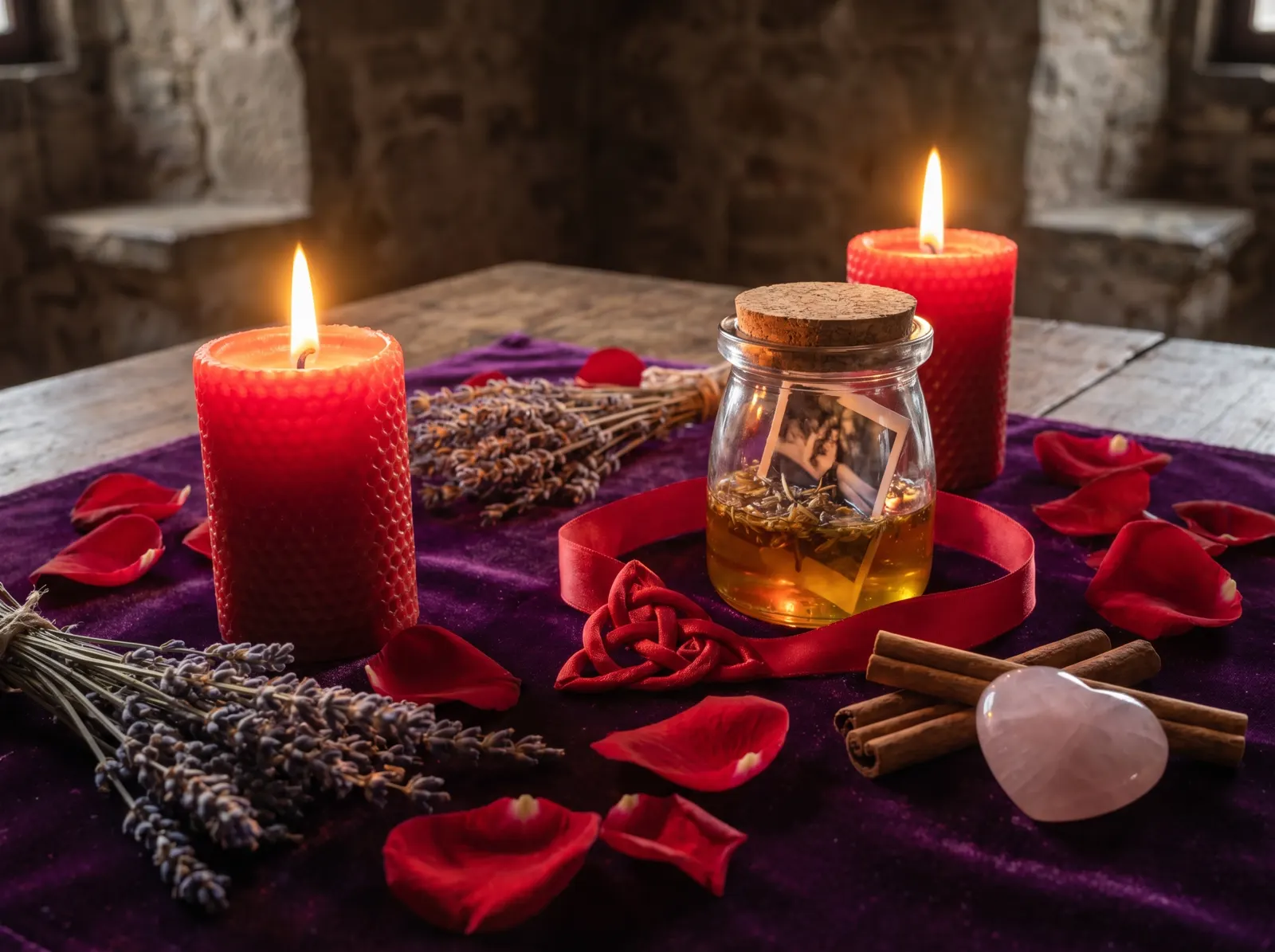
Step 1: name what you need
Before you light a candle, write a list. What do you do that goes unseen? What would you like to hear? What would make you feel noticed? Be specific. I would like you to say thank you for dinner. I would like you to ask about my day. I would like you to take the children on Saturday mornings.
Specific wishes are easier to grant than a vague one. Of course, a husband cannot easily respond to appreciate me more. He can respond to please put your plate in the sink and say it was good. This list is the real beginning of the work.
Step 2: soften your own resentment
Resentment is a heavy thing. After all, it sits in the chest and colors every conversation. Before you ask your husband for anything, release some of it. Also, a simple release ritual works well.
You need: a white candle, a piece of soft thread, a pen and paper.
- Write down the unspoken complaints: I am tired. I feel invisible. I do too much.
- Tie the thread loosely around the paper.
- Light the candle and read the list aloud, slowly.
- Untie one knot at a time, saying I release this.
- Burn the paper safely or bury it. Breathe.
This does not erase the feelings. Still, it lowers their volume, so that when you speak, you speak from steadiness and not from storm.
Step 3: a gratitude candle for the home
A gratitude candle works on the atmosphere, and on you. After all, it turns your attention toward what is good, which is where your husband’s attention will follow.
On a Friday evening, light a pink or white candle at the table. Say aloud one thing you are grateful for in your husband: I am grateful that you work so hard. I am grateful that you fixed the sink. Say one thing you appreciate about yourself. Then sit for five minutes.
If he is willing, invite him to say one thing as well. If not, do it alone. Over several weeks, the habit often becomes contagious. Also, people who hear thanks tend to start giving it.

Step 4: speak, kindly and clearly
The candle opens the ground. The conversation plants the seed. Choose a calm moment, not an argument. Begin with something warm: I love our life, and I want us to feel closer. Then state the need: I have been feeling unseen lately, and I would love for us to notice each other more.
Offer a request, not an accusation. Could we have ten minutes after dinner without phones? Could you tell me one thing each day you appreciated? Ask what he needs too. Of course, a marriage of mutual appreciation is a two-way street, and he may also feel unseen.
Small habits that build appreciation
Daily habits do more than occasional grand gestures.
- Say thank you for small things, and invite him to do the same.
- Greet each other when you come home, with eye contact and a hug.
- Ten minutes of talk without phones each evening.
- A weekly date, even if it is a walk.
- One written note a month: a line on a card or a text.
- Share the load. Ask for specific help instead of waiting to be noticed.
None of these is dramatic. Indeed, all of them change the weather of a marriage.
A herbal touch for the home
Herbs and scents can support the mood. Rose in a small bowl on the table brings tenderness. Also, a pot of basil on the windowsill is an old symbol of loyalty. Lavender in the bedroom helps sleep, and sleep helps patience. Of course, a pot of chamomile tea in the evening is an invitation to sit.
These are gentle touches, not tricks. Never put anything in your husband’s food or drink without his knowledge. Read our article on using rose petals for a romance boosting spell for more ideas.

A four-week plan
| Week | Focus | Practice |
|---|---|---|
| 1 | Release | Release ritual; write your list of needs |
| 2 | Gratitude | Friday gratitude candle; say thanks daily |
| 3 | Conversation | Have the calm talk; ask for one specific change |
| 4 | Review | Notice what changed; thank him for one effort; adjust |
A plan gives the month a shape. Repeat the cycle if it helps.
Signs that appreciation is returning
Look for small changes. Indeed, he says thank you without being reminded. He asks about your day. He notices something you did. Also, he offers to help before you ask. He touches your shoulder when he passes. Of course, he puts his phone down when you speak.
Many clients see first signs within 3 to 7 days. Be gracious when you see them. Thank him for thanking you. Appreciation grows when it is rewarded, and a husband who is praised for noticing tends to notice more.
What if he does not respond?
Give it time. Habits take weeks to change. Indeed, if a month passes with no movement, speak again, more directly. Say, I told you I feel unseen. I have been trying to change things. I need to see you try too.
If he dismisses you, mocks the request or ignores it entirely, that is information. Suggest a counselor. Also, if he refuses and the pattern continues, think about what you are willing to accept. You may not be able to change him, and you are allowed to ask for more.

A story, in outline
This is a composite, not a single client, and details are changed.
A woman in Charlotte wrote to me after eleven years of marriage. Of course, her husband was kind but absent, always on his phone, rarely saying thank you. She was tired and starting to feel bitter. Indeed, she wanted a spell to make him grateful.
We talked about what she needed. Also, she did a release ritual, started a Friday gratitude candle and asked for ten minutes without phones each evening. After two weeks he said thank you for dinner, awkwardly. Of course, after four, he asked what she had enjoyed about her week.
He did not become a different man. Indeed, he became a slightly more attentive one, and she became much less resentful. It was enough to change the feel of the marriage. In fact, it is a pattern, not a promise.
Is it ethical to try to change a husband this way?
Asking for kindness, speaking honestly and tending your own heart are ordinary parts of marriage. Of course, a gentle ritual that supports them leaves your husband completely free. The line is crossed when you try to control him, drug him or deceive him. Indeed, our work is intended to influence the heart, mind, and emotional connection, and it never replaces his choice.
Read our guide on ethical guidelines and the article on free will for the tests I use.
Common mistakes
The same few mistakes appear again and again.
- Waiting for him to guess.
- Saving up complaints and delivering them all at once.
- Withdrawing affection as punishment.
- Comparing him to other husbands.
- Doing a ritual to avoid a conversation.
If you recognize one, soften and begin again.

Looking after yourself
You cannot pour from an empty cup. Sleep at regular times. Eat real meals. Walk every day. See friends. Do something that is only yours each week: a class, a bath, a book. Appreciation starts with how you treat yourself.
If your mood sinks into hopelessness, or you have thoughts of harming yourself, please contact a doctor, a counselor or a crisis line in your area straight away. Also, no ritual should stand between you and proper care.
A closing thought
The best spell for being appreciated is probably to appreciate. Still, it starts a small cycle that can lift a whole marriage. Say thank you. Ask for what you need. Light a candle. Be patient. And remember that you are worth being seen, whether or not he learns to see you.
If he does, you will have a warmer home. Indeed, if he does not, you will have learned what you need. Both are steps forward.
When to ask for help
If you feel stuck, if you cannot tell whether this is a phase or a pattern, or if you simply want an honest outside view, Baba Ali offers a free, private consultation. Also, he will listen, tell you what he sees and explain what, if anything, fits. You pay only for ritual materials, and unused materials are refunded in full.

Understanding the mental load
Much of what goes unappreciated in a marriage is invisible work. Still, it is not only the cooking and the cleaning. It is the remembering: the dentist appointment, the school form, the gift for his mother, the milk running low, the child who seems unhappy. Researchers call this the mental load, and it falls unevenly in many households.
A husband may not see it because it does not look like work. After all, it looks like a calm, running home. When the load is named, many husbands are genuinely surprised. I did not realize you were carrying all that is a common reply, and it can be the start of a more equal arrangement.
Try writing a short list of the invisible tasks you do in a week, and share it without blame. Offer to divide some. Appreciation comes more easily when a person can see what there is to appreciate.
The five ways people feel appreciated
People feel appreciated in different ways, and a mismatch can feel like neglect. Also, some feel appreciated by words: a plain thank you, a kind note. Some by time: undivided attention. Of course, some by acts: a task done without being asked. Some by touch: a hand on the back. Indeed, some by gifts: a small, thoughtful token.
Ask yourself and your husband which ones matter most. You may find you have been offering one kind of appreciation while he hoped for another. Learning each other’s language is one of the kindest ways to repair the gap, and it costs nothing.
What to do on a bad day
Some evenings you will feel unseen and tired and ready to snap. A small emergency routine helps. Step outside for three minutes. Drink water. Say to yourself, I will talk about this tomorrow when I am calm. Light a candle if you like and let the flame hold your attention for a short while.
Then, if you still feel the need to speak, do so in gentle words and with a specific request. A sentence such as I am worn out tonight and could use a hand with the dishes is much more likely to be heard than a long list of complaints.
Teaching the children to say thanks
If you have children, they watch how adults treat each other. Also, a family that says thank you out loud teaches children a habit that will serve them all their lives. Let them see you thank your husband and let them see him thank you. Ask children to name one thing they appreciated each evening at dinner.
This small family ritual is a quiet spell in its own right. Still, it turns the dinner table into a place where attention is paid, and it gives your husband a regular, easy chance to practice gratitude.
Questions wives ask me about being appreciated
“Should I just stop doing things until he notices?” Withdrawing effort as a test usually breeds resentment on both sides. After all, it is kinder and more effective to ask for what you need and to share the load openly.
“He appreciates everyone but me. Why?” Familiarity can make us save our best manners for strangers. In fact, it does not mean you matter less. It means the habit needs rebuilding at home.
“Is it selfish to want thanks?” No. Wanting to be seen is among the most ordinary human needs. Saying so is not selfish, it is honest.
“Can a candle really change him?” A candle changes your evening. Your evening, kindly handled, can change a conversation. Still, that is how the small things add up.
Rituals for the two of you together
If your husband is willing, a shared ritual can be sweet. Indeed, on Sunday evening, light one candle and each say three things you were grateful for in the week. Write one wish for the coming week on a slip of paper and place it in a jar. Also, on the last evening of the month, open the jar and read the wishes aloud.
Keep it light. Still, this is not a therapy session. It is a small, warm habit that fits into ten minutes. Indeed, even a husband who rolls his eyes at candles often warms to a ritual that has no pressure in it and ends with a hug.
If he declines, do it alone. Also, the jar still works as a record of what you hoped for, and the candle still marks a pause in your week.
How long to wait before deciding
Give your efforts at least two or three months before deciding whether the marriage is changing. Habits are slow. Of course, some weeks will feel like progress and some will not. Keep a short note each Sunday: what improved, what did not, how you feel.
At the end of three months, read your notes. Indeed, if there is a trend toward warmth, keep going. If there is none, speak plainly, bring in a counselor and decide what you will accept. Also, the point is not to endure forever. It is to give a loving marriage a fair chance to relearn gratitude.
A small prayer or intention you can use
If you like words to hold, try this simple intention each evening: May I see the good in my husband, and may he see the good in me. May we speak kindly. May our home be warm. Say it quietly while you light the candle or while you wash your face.
It is not a demand, and it does not name a date. Still, it asks for sight on both sides. Many wives tell me that after a week of saying it, they notice more good in their husbands without effort, and that the noticing seems to travel. Gratitude, like resentment, is catching.
A note on forgiving the past
Years of feeling unseen leave a pile of small injuries. You may find that you cannot appreciate him because you are still angry about old hurts. That is normal. Forgiveness does not require forgetting. After all, it asks only that you stop paying interest on old debts.
A forgiveness bath, a letter you do not send and a candle lit for the marriage you hope to have can all help. Take it slowly. Also, some injuries need a counselor, and there is no shame in asking for one.
Where to go next: services, guides and cities
If this article touched something real for you, these pages go deeper. Of course, each one is written in the same plain, careful way.
Related services
Related guides
Cities Baba Ali serves
When it is better to ask Baba Ali directly
Reading helps, and some situations still need someone who can look at your whole story. Baba Ali offers a free, private consultation by phone, WhatsApp or the contact form, with no obligation. Indeed, if you go ahead, you pay only for the ritual materials, named item by item, and unused materials are refunded in full. Support is open 24/7 by chat, and calls are answered within 24 hours.
More from the blog
Keep reading with these related articles:
Questions people ask
Can a spell make my husband appreciate me more?
A spell cannot force gratitude, but gentle rituals combined with honest habits and a clear conversation can help him notice and value what you do.
Why does my husband not appreciate me?
Usually habituation: the mind stops noticing steady effort. Busy schedules and screens make it worse. Cruelty is less common.
What ritual helps with gratitude in a marriage?
A weekly gratitude candle at the table, where you each name one thing you appreciate, supports a habit of noticing.
How long does it take to see a change?
Many clients see first signs within 3 to 7 days, but lasting change usually takes weeks of steady practice.
What if he does not change?
Speak again more directly, suggest a counselor and decide what you are willing to accept.
Can I put herbs in his food?
No. Never give anything to your husband without his knowledge. Use herbs in the home, not in his food or drink.
When is a lack of appreciation a sign of abuse?
If he insults, controls, isolates or frightens you, it is mistreatment. Seek support and do not rely on a spell.
Is it ethical to do a ritual for this?
Gentle work that tends your heart and supports honest talk is ethical. Work that tries to control him is not.
Can Baba Ali help my marriage?
Yes. Baba Ali offers a free consultation and gentle ritual support, and will tell you honestly if other help is needed.
Tell me about your situation
Call or WhatsApp Baba Ali now. Also, the first conversation is free, and everything you say stays private.