How to cast a spell for a happy and peaceful marriage
Cleansing, harmony candles, small daily rituals and the honest habits that keep a home calm. A gentle guide for couples who want peace, not drama.
How do you cast a spell for a happy and peaceful marriage?
You cast a spell for a happy and peaceful marriage by cleansing the home, lighting a harmony candle with a clear intention, using calming herbs such as lavender and chamomile, and pairing these with daily habits: kind speech, shared meals, quick repair after quarrels and time together. Also, the ritual steadies the household. The habits keep it steady.
When love begins to fade, the pain can feel unbearable. You may lie awake wondering what went wrong, whether they still think of you, and whether the bond can be restored. I understand this pain. In fact, for more than 30 years, I have helped people heal broken relationships and reopen the door to love.
Most marriages I hear about are not in crisis. They are tired. Still, there are too many small arguments, too many tight mornings, too many evenings of two people in separate rooms. Nothing is broken, but nothing is quite peaceful either.
This article is for that kind of marriage, and for newlyweds who want to begin well. After all, it offers a gentle ritual plan, practical habits and honest advice about what a spell can and cannot do. If your marriage is in deeper trouble, you will find notes on where to go next.

What peace in a marriage really means
A peaceful marriage is not a marriage without disagreement. Of course, every pair of people argues. Peace is the ability to disagree without contempt, to repair quickly, to feel safe in your own home and to trust that the other person is on your side.
It is a quiet thing, built from a thousand small acts. Say good morning. Indeed, ask about the doctor’s appointment. Apologize without a speech. Also, remember the thing they said last week. These do not sound like magic. In fact, they are the stuff of peace.
A spell cannot create those habits. Still, it can help create the conditions in which they come easily, by calming the mood and reminding you of what you want.
What a spell can and cannot do
A ritual cannot repair deep wounds, end abuse or change a person who does not want to change. After all, our work is intended to influence the heart, mind, and emotional connection. For a loving but strained marriage, a gentle ritual can lower the temperature and steady the household.
| A spell can help with | A spell cannot do |
|---|---|
| Calming the mood of a tense home | End abuse or harm |
| Reminding both of you to be gentle | Replace honest talk and counseling |
| Clearing leftover tension after arguments | Make a partner love you |
| Giving the household a shared quiet moment | Guarantee any outcome |
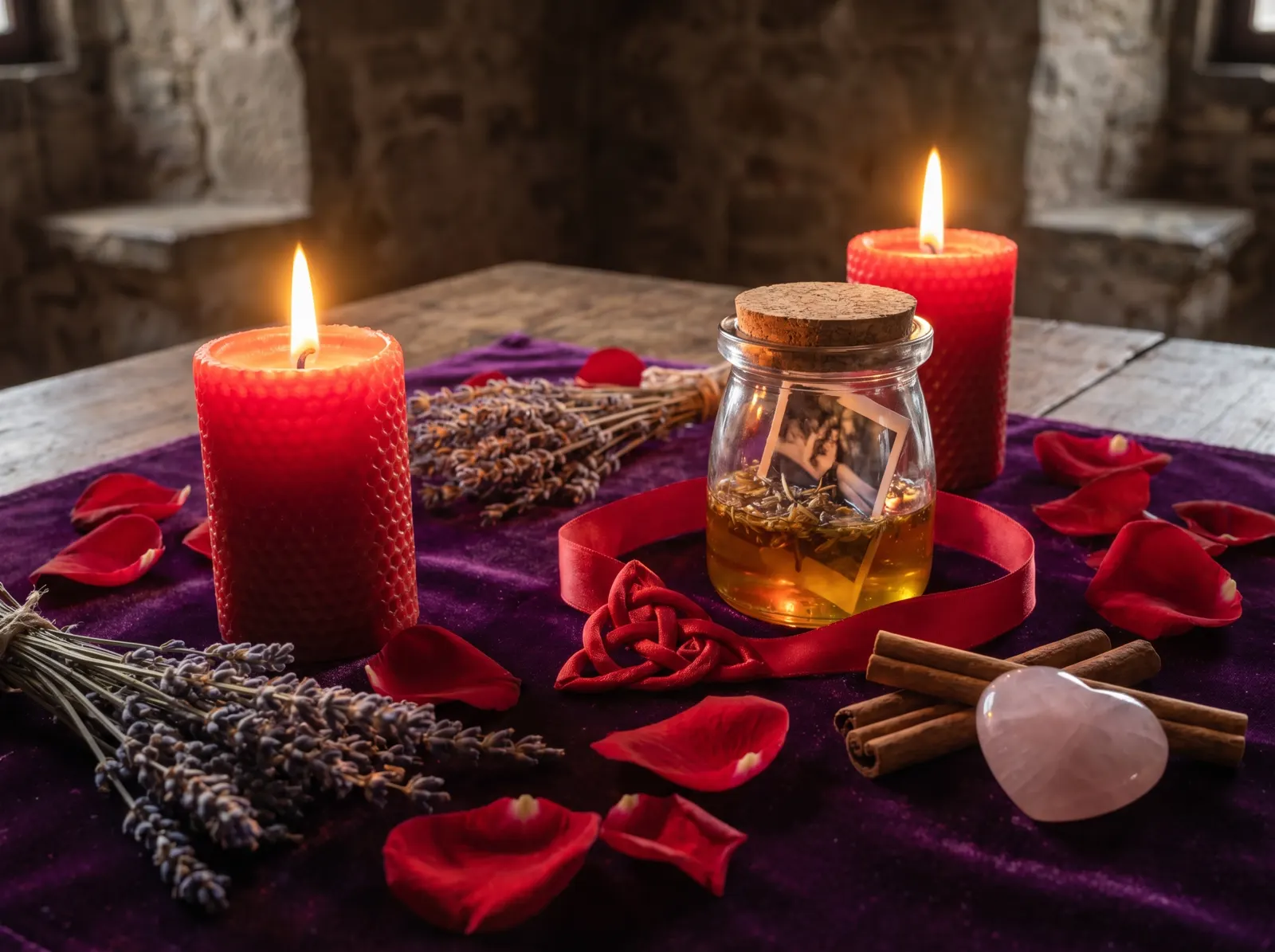
Step 1: clean the home, ordinary and spiritual
Begin with the physical. Of course, tidy the rooms where you argue. Wash the bed linen. Clear the surfaces. Indeed, open every window for ten minutes. A clean home is easier to feel peaceful in, and cleaning together can be a gentle act of partnership.
Then clear the air. Also, wipe door frames with a cloth dipped in salt water. Burn a sprig of rosemary safely with a window open, or simply light a white candle in each room for a few minutes. Say quietly: This home is calm, and we are safe in it. Our guide on cleansing negative energy gives more options.
Step 2: a harmony candle
A harmony candle focuses the household’s intention on peace. In fact, it is simple and best done weekly.
You need: Still, a white candle, a pen and paper, and optionally a pinch of dried lavender.
- Write your intention: May our home be peaceful. May we speak kindly. May we forgive quickly.
- Place the paper under the candleholder with the lavender.
- Light the candle at the dinner table or in a quiet room.
- Sit for ten minutes, breathing slowly and picturing a quiet evening.
- Close with thanks and put the candle out.
If your spouse is willing, invite them to sit with you. After all, if not, do it alone. Over weeks, the habit often draws others in.
Step 3: herbs for the home
Herbs can support the mood without fuss.
| Herb | Use | Meaning |
|---|---|---|
| Lavender | Sachet by the bed | Calm and rest |
| Chamomile | Tea in the evening | Patience and forgiveness |
| Rose | Bowl on the table | Tenderness |
| Basil | Pot on the kitchen sill | Loyalty and protection |
| Rosemary | Sprig in the kitchen | Clarity and clean starts |
| Thyme | Cooking, small bunch | Courage and steadiness |
Never put herbs in anyone’s food or drink without their knowledge. Of course, keep candles and herbs away from pets and children.

Step 4: a nightly peace practice
Small nightly rituals are often the most powerful. Indeed, before sleep, put phones away. Sit on the edge of the bed for two minutes. Also, say one thing you are grateful for in each other, aloud. If you have quarreled, say sorry in one sentence. Touch hands. Turn out the light.
That is the whole ritual. In fact, it costs nothing and takes a few minutes. Over months, it becomes the way a marriage ends each day: not in the glow of a screen, but in a word of thanks.
Step 5: a rule for arguments
Peace depends less on never arguing than on how you do it. Still, agree on a few simple rules, together, in a calm hour.
- No name-calling or contempt. Attack the problem, not the person.
- Pause allowed. Either of you can say I need twenty minutes and walk away, then return.
- No raising old wounds as weapons.
- No arguments in the bedroom after bedtime.
- Repair before sleep, even if only with a hug and we will finish this tomorrow.
A short repair after a quarrel does more than a long victory.
Step 6: a weekly meeting for the marriage
Many peaceful couples keep a short weekly meeting. After all, sit for twenty minutes on Sunday evening with a cup of tea. Go over the week: what went well, what was hard, what is coming up, and what each of you needs.
Use a simple structure. Appreciate first: each names two things they valued. Then talk about logistics. Then raise one concern each, gently. Of course, end with one thing you will do for each other. It sounds formal, and it prevents resentment from piling up.
If you have children, include a short family version: dinner talk about one good thing and one hard thing from the day.

A weekly rhythm
| Day | Peace practice |
|---|---|
| Monday | Say thank you at breakfast; set one intention for the week |
| Wednesday | Ten minutes of talk without phones |
| Friday | Harmony candle at dinner; share a meal |
| Saturday | Do something together outdoors |
| Sunday | Weekly meeting; tidy the home together |
You do not need all of these. Indeed, choose two or three and build from there.
When the marriage is not peaceful
Sometimes the trouble is deeper than a tired home. Also, if your marriage is marked by constant fear, contempt, control or violence, a harmony candle is not the answer. Please talk to someone you trust, and contact a support service in your area.
If the trouble is unresolved resentment, an affair, a long silence or a loss of trust, consider a couples counselor. In fact, spiritual work can sit beside counseling. It cannot replace it. Our article on herbs for a spell to stop a divorce Still, is written for marriages at that edge.
Protecting the marriage from outside tension
Marriages are rarely troubled by two people alone. After all, in-laws, money, work stress, neighbors and friends all press in. A peaceful marriage learns to filter.
Agree on how you will speak about each other to others. Of course, decide how much of your private life you share. Support each other in front of family. Indeed, handle money decisions as a team. When outside pressure grows, take a few minutes to light a candle and remind yourselves that you are on the same side.

A story, in outline
This is a composite, not a single client, and details are changed.
A woman in Columbus wrote to me after nine years of marriage. Also, she and her husband were not fighting, but everything felt tight. They snapped at each other in the mornings and slept with their backs turned. In fact, she wondered whether she should ask for a spell to make them love each other again.
We talked. Still, I suggested a cleaning day, a weekly harmony candle and a nightly two-minute thank-you. She asked her husband to try. After all, he rolled his eyes at the candle and agreed to the thank-you. After three weeks he started saying his first. Of course, after six, they were laughing more over breakfast.
The candle did not do it. Indeed, the small habit did, and the candle reminded them. It is a pattern, not a promise.
Signs your marriage is growing more peaceful
Notice small things. Arguments end sooner. You apologize faster. You look forward to coming home. You sleep better. You touch more. You laugh. You remember to say thank you. Your children seem calmer.
Many clients see first signs within 3 to 7 days, often in mood and atmosphere. Also, lasting peace takes weeks and months of steady habits. Write down what you notice each Sunday, and celebrate small gains.
Is it ethical to cast a spell on your own marriage?
A ritual that cleanses your home, calms your heart and encourages kind habits leaves your spouse completely free, and I consider it ethical. In fact, the line is crossed when someone tries to control a spouse, to drug them or to deceive them. Our work is intended to influence the heart, mind, and emotional connection, and it never replaces choice.
Read the guide on ethical guidelines for the full tests.
Common mistakes
The same few mistakes appear again and again.
- Expecting a candle to do the work of a conversation.
- Doing rituals secretly to change a spouse.
- Letting small resentments pile up.
- Arguing late at night when tired.
- Giving up after a bad week.
If you recognize one, soften and begin again.

Looking after yourself
A peaceful marriage starts with a peaceful you. Sleep at regular times. Eat real meals. Walk every day. See friends. Still, take a few minutes each day that are only yours.
If your mood sinks into hopelessness, or you have thoughts of harming yourself, please contact a doctor, a counselor or a crisis line in your area straight away. After all, no ritual should stand between you and proper care.
A closing thought
Peace in marriage is rarely dramatic. Of course, it is the quiet result of many kindnesses, repaired quarrels and shared evenings. Light the candle, wipe the table, say the thank-you. Indeed, if you do these things for long enough, the house changes.
May your home be calm, may your words be kind, and may you find in each other a place to rest.
When to ask for help
If your marriage is tense in a way you cannot name, if you want an honest outside view or if you simply want company in the work, Baba Ali offers a free, private consultation. Also, he will listen, tell you what he sees and explain what, if anything, fits. You pay only for ritual materials, and unused materials are refunded in full.

Money, the quiet source of marital tension
Of all the things that disturb the peace of a marriage, money is the most common and the least discussed. In fact, disagreements about spending, saving, debt, family support and who earns what can sit under every quarrel like water under a floor.
A peaceful marriage has a shared way of talking about money. Still, set a regular, calm hour each month to look at the numbers together. Agree on a small amount each of you can spend without asking. After all, write down one shared goal, like a trip, a cushion or a debt cleared. Avoid money talk when tired or angry.
If money is a deep source of shame or fear for either of you, a financial counselor can help. Of course, many are free or low cost. Peace in the household often arrives not through candles, but through a shared spreadsheet and a kind voice.
In-laws and extended family
A marriage joins two families, and families have opinions. Your mother-in-law may criticize your cooking. Your brother may disapprove of your spouse. Indeed, holidays can turn into diplomatic missions.
The kindest rule is to put the marriage first, quietly. Also, speak well of your spouse in front of your family. Handle your own relatives, and let your spouse handle theirs. In fact, agree in advance on how long visits will last, where you will stay and how you will say no. If a relative crosses a line, support your spouse in saying so.
A candle at the table before a family gathering and a short moment to remember you are on the same side can change the atmosphere more than you expect.
Intimacy and affection
Peace is not only the absence of conflict. Still, it is also the presence of warmth. Touch, kisses, laughter and playfulness are part of a peaceful home. After all, many couples let them slip under the weight of work, children and tiredness.
Bring them back in small ways. Of course, a six-second kiss when you part. A hand on the back as you pass. Indeed, a hug at the end of the day that lasts long enough to feel. A shared joke. Also, a date once a month. If physical intimacy has faded, talk about it kindly, without blame, and consider a counselor if you need help.
Rose petals in the bedroom, lavender on the pillow and an unhurried evening are gentle ways to set the mood, but the mood is made by attention.
Parenting together
Children bring joy and strain. In fact, agreement on how to raise them is one of the biggest sources of peace or conflict in a marriage. Talk about your values when you are calm, not in the middle of a tantrum. Still, back each other up in front of the children, and disagree in private.
Make time for the two of you, even when the children are small. After all, a babysitter once a month, a walk after the children are asleep, a ten-minute chat while they play. A marriage that has only a parenting partnership will feel thin. Keep the friendship alive.
Children learn about love by watching. Of course, a peaceful household is a gift to them as well as to you.
Forgiveness and fresh starts
Every marriage needs forgiveness, the regular, ordinary kind. For the forgotten anniversary. For the harsh word. Indeed, for the thing that was said in the car. Forgiveness is not forgetting. Also, it is deciding not to carry each small hurt forward as ammunition.
A simple ritual can help. In fact, at the end of the week, each writes any lingering hurt on a slip of paper, reads it aloud if both are willing and then tears it up or burns it safely. Say together: We start fresh. Still, it is a small ceremony, and it frees the home from a pile of old irritations.
Spiritual and shared meaning
Peaceful marriages often share a sense of meaning beyond daily tasks. After all, that might be faith, a cause, a creative project, a garden or simply the project of raising a family well. Shared meaning gives small irritations a context and gives the two of you something to turn toward together.
Ask each other what matters most to you in the next ten years. Write both answers down. Of course, look for the overlap, and build a small ritual around it: a prayer before dinner, a yearly retreat, a Sunday walk. These are quiet spells in their own right, because they make a life feel like a shared story.
Common seasons of a marriage and what peace asks of each
| Season | Common strain | What peace asks |
|---|---|---|
| Newlywed | Learning each other’s habits | Patience and curiosity |
| Young children | Tiredness and little time | Teamwork and small kindnesses |
| Teen years | Worry and disagreement about parenting | United front and humor |
| Empty nest | Rediscovering each other | New shared projects |
| Later life | Health and loss | Gentleness and presence |
Each season calls for a slightly different peace. Indeed, a marriage that notices the season can adapt, and one that does not often feels strangely unhappy.
Questions couples ask me
“We rarely argue, but we feel distant. Is that peace?” Not always. Also, silence can be peace or avoidance. Ask each other what you have not been saying.
“Can we do a ritual together if we are not religious?” Yes. In fact, a candle, a pause and a few honest words need no creed.
“What if my spouse mocks it?” Still, keep it small and private. Your steadiness will do the persuading.
“How long until we feel different?” After all, many feel lighter within a week. A deeper change takes months.
A ritual for the anniversary of your wedding
Each year, mark your anniversary with a small ceremony. Of course, sit together with one candle between you. Read a letter you wrote on your wedding day, or write a new one. Indeed, share three things you have learned about each other in the past year. Say one thing you forgive and one thing you are grateful for.
End by renewing your promise in your own words: I choose you again. Then share a meal. Also, it is a simple, quiet ritual and one of the most powerful acts of peace I know, because it reminds both of you that the marriage is not an accident but a choice made over and over.
A gentle prayer for the home
If you like words, here is one you can adapt: May this home be filled with kindness. May we listen as well as we speak. May we forgive quickly and love freely. May anyone who enters feel welcome, and may we find rest here at the end of each day.
Say it at the door when you come home, or at the table before a meal, or in the quiet of the evening. In fact, it takes half a minute. Over a year, it becomes a thread of intention woven through ordinary days.
One last practical tip: the five-minute reset
When the house feels tense, try a five-minute reset. Stop what you are doing. Still, both of you sit down, even on the stairs. Breathe slowly together for one minute. After all, each says one thing that is bothering you in a single sentence and one thing you appreciate about the other. No replies. Then stand, hug and carry on.
The reset works because it interrupts the spiral before it takes hold. Of course, it does not solve the problem. It restores the sense that you are two people on the same side facing a problem, and not two people facing each other. Indeed, couples who use it often tell me it is the single most useful habit they learned, and it costs nothing at all.
Where to go next: services, guides and cities
If this article touched something real for you, these pages go deeper. Also, each one is written in the same plain, careful way.
Related services
Related guides
Cities Baba Ali serves
When it is better to ask Baba Ali directly
Reading helps, and some situations still need someone who can look at your whole story. Baba Ali offers a free, private consultation by phone, WhatsApp or the contact form, with no obligation. In fact, if you go ahead, you pay only for the ritual materials, named item by item, and unused materials are refunded in full. Support is open 24/7 by chat, and calls are answered within 24 hours.
More from the blog
Keep reading with these related articles:
Questions people ask
How do you cast a spell for a happy and peaceful marriage?
Cleanse the home, light a weekly harmony candle with a clear intention, use calming herbs and pair these with kind daily habits and quick repair after quarrels.
Can a spell make my marriage peaceful?
A spell can calm the mood and remind you to be gentle. Peace is kept by habits: kind speech, shared time and repair.
What herbs help a peaceful home?
Lavender, chamomile, rose, basil, rosemary and thyme are common, used in sachets, teas, bowls and pots.
How often should we do a harmony candle?
Weekly is a good rhythm, with a short nightly thank-you between.
What if my spouse does not believe in rituals?
Do it alone, privately. Or skip the candle and keep the habits: a nightly thank-you, a weekly meeting and a repair rule.
What if our marriage has deeper problems?
Consider a couples counselor. If there is abuse, put safety first and contact a support service.
How long does it take to feel more peaceful?
Many clients see first signs within 3 to 7 days, but lasting peace takes weeks and months of steady habits.
Is it ethical to cast a spell on my own marriage?
A ritual that cleanses the home and encourages kindness is ethical. Rituals that control or deceive a spouse are not.
Can Baba Ali help my marriage?
Yes. Baba Ali offers a free consultation and gentle ritual support, with you paying only for materials.
Tell me about your situation
Call or WhatsApp Baba Ali now. Still, the first conversation is free, and everything you say stays private.