How to do a love spell using your own hair
Hair is one of the oldest personal links in folk practice. Here is how to use your own in a gentle, safe ritual for yourself, and why other people’s hair has no place in it.
Can you do a love spell using your own hair?
Yes, in a gentle, self-directed way. Your own hair is a personal symbol of you, used in folk practice to represent the one who casts. You can include a few strands in a mojo bag, braid them with a ribbon in a self-love ritual or return them to the earth with a wish. What you should never do is use another person’s hair to influence them. That is a violation of consent and has no place in ethical work.
When love begins to fade, the pain can feel unbearable. Also, you may lie awake wondering what went wrong, whether they still think of you, and whether the two of you can restore the bond. I understand this pain. Of course, for more than 30 years, I have helped people heal broken relationships and reopen the door to love.
Hair has a special place in the imagination. After all, it grows from us, carries our scent and changes with our lives. We cut it at turning points, braid it for ceremony and keep a lock of it from a child or a loved one. In fact, it is little wonder that folk practice has long seen hair as a link to the person it came from.
In this article I will explain why hair appears in rituals, how to use your own in ways that are safe and kind, what the practice can and cannot do and why I strongly advise against using anyone else’s hair. The distinction matters. Your own hair is yours to give. Another person’s is not.
Why hair appears in folk rituals
Across many cultures, hair carries meaning. Of course, in parts of Africa, hairstyles mark age, status and mourning, and shaving or braiding the hair belongs to rites of passage. In Judaism and Islam, covering or cutting hair is tied to modesty and devotion. Indeed, in Hindu temples, pilgrims offer hair as a gift. In Europe, a lock of hair was kept as a keepsake, and in folk magic it was thought to hold a link to its owner.
The idea behind the magic is sympathy: what was once part of a person remains connected to them. Modern practitioners differ about whether this is literal or symbolic. What is clear is that hair is deeply personal, and that using it ties a ritual to a particular person in a very direct way.
That is exactly why I urge caution. Also, a symbol that strong should only ever be used on yourself.
What a hair ritual can honestly do
Your own hair in a ritual cannot compel anyone to love you. Of course, our work is intended to influence the heart, mind, and emotional connection, and a personal ritual supports that by deepening your sense of presence and intention. The gesture of offering something of yourself can feel very meaningful.
| A hair ritual can help with | It cannot do |
|---|---|
| Making a ritual feel personal | Make anyone love you |
| Marking a turning point, such as a fresh start | Control another person |
| Offering something of yourself with care | Replace honest action |
| Deepening your sense of self-respect | Guarantee any result |
The firm rule: only your own
Let me be very clear. Never take another person’s hair without their knowledge to use in a ritual. After all, that means no strands from a brush, a pillow, a shower drain or a barbershop floor. Doing so is a violation of their privacy and consent. Also, if it were discovered, it could shatter trust and may even carry legal consequences.
A love that depends on a hidden act is not a love you can rest in. Of course, if you are tempted, ask yourself what you are afraid of. Often the answer is loss. That fear is human, and it deserves a conversation, a friend or a counselor, not a secret ritual.
Safe ways to use your own hair
If you wish to include your own hair in a ritual, here are a few gentle methods.
| Method | How it works |
|---|---|
| A few strands in a mojo bag | Adds a personal note to a charm for your own openness |
| A braid tied with a ribbon | A symbol of commitment to yourself, tied on a new moon |
| Hair returned to the earth | Planted at the base of a tree with a wish for growth |
| Hair on a candle’s saucer | A strand or two near a candle as a mark of presence |
| A lock kept in a locket | A keepsake of a turning point, such as after a breakup |
Use only what falls naturally when you brush your hair, or a small trim. Never pull hair out.
A self-love braid ritual
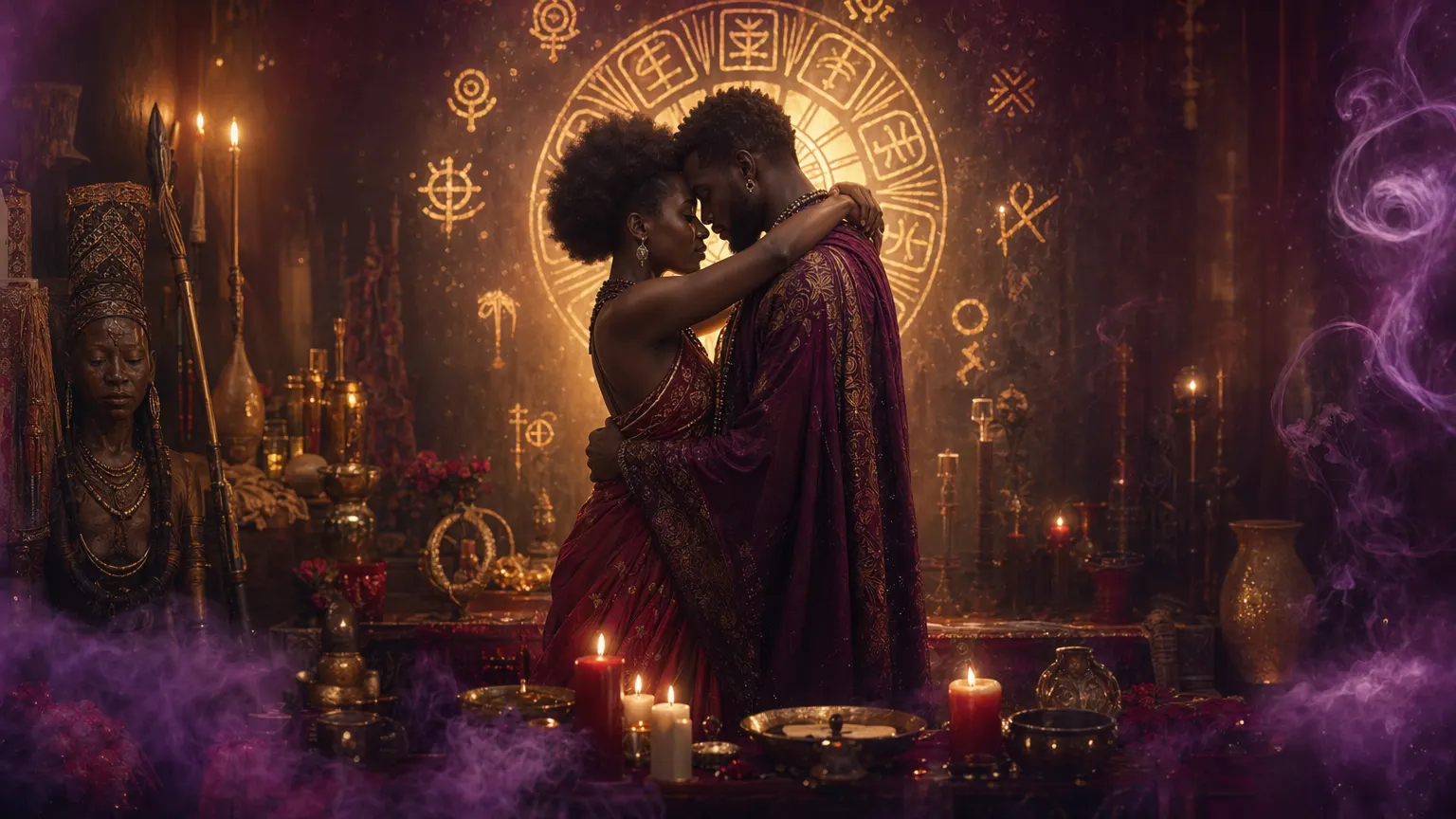
You need: a few strands of your own hair from a brush, a short length of pink ribbon or thread, a pink candle, a pen and paper.
- On a new moon, write: I honor myself. I am open to love that honors me.
- Light the candle and read the words aloud.
- Braid or twist the strands together with the ribbon, tying a knot at each end.
- Hold the braid to your heart for a minute and breathe slowly.
- Place it in a small bag or box, or wrap it in the paper.
- Close with thanks.
Keep the braid for a month, then bury it in a plant pot with thanks or keep it as a keepsake.
A letting-go ritual with hair
Hair is also used to mark endings. Indeed, many people cut their hair after a break-up or a hard year, and it can feel like a quiet ceremony. If you want to turn it into one, do it with care.
Before your appointment, write what you are leaving behind. Also, at the salon or at home, as the hair falls, say to yourself, I release this season. Afterward, take a small lock and bury it in earth with a word of thanks, or burn a strand safely in a flame with a wish. Then wash your hair and enjoy the feeling of newness. Still, it is among the gentlest, most human rituals there is.
Hair care as self-love
The simplest ritual with hair needs no spell at all. Brush it slowly in the morning. Wash it with something that smells good. Oil the ends. Tie it up with a ribbon you like. Notice how it feels. Indeed, in many cultures, tending hair is an act of love, among mothers and daughters, friends and partners.
If you can, tend your hair with attention once a week. Take twenty minutes. Put on music. Let yourself enjoy the touch. Also, a person who takes time to care for themselves carries a kind of ease into the world, and ease is attractive.
Why not use someone else’s hair
There are five reasons.
- Consent. Another person has not agreed to be the object of a ritual.
- Trust. A hidden act poisons a relationship if it is ever discovered.
- Legality. Taking items without permission can be theft or harassment in some places.
- Ethics. Our work is intended to influence willing hearts, never to bind or control.
- Effectiveness. There is no reliable evidence it works, and it distracts from the honest steps that do.
If you already have such hair, I ask you to return it to the earth with thanks and to choose a gentler path. See the guide on ethical guidelines for more.
If a partner offers you their hair
Occasionally a loving partner will offer a lock of hair as a keepsake or a symbol of commitment. Still, that is a different matter from taking it. If it is given freely, with understanding, as a gift or a pledge, you may hold it with gratitude.
Even then, I advise against using it in spells to influence them. Keep it as a keepsake. Let it remind you of trust. Indeed, a lock of hair given in love is best treated as a gift, and gifts are not tools.
Hair and cultural respect
Hair carries deep significance in many communities. Also, for many Black women and men, hair is bound up with history, identity and pride, and the way it is touched, cut or styled is sacred. In other cultures, specific hairstyles or the cutting of hair belong to religious life.
If you use your own hair in a ritual, do so with the understanding that it belongs to your heritage. Of course, if you are drawn to a practice from a tradition that is not yours, learn its meaning and do not borrow its sacred forms casually. Treat hair, yours and others’, with the respect it deserves.
A story, in outline
This is a composite, not a single client, and details are changed.
A man in Atlanta wrote to me with a request. Indeed, he had a few strands of hair from his girlfriend’s brush and wanted a ritual to keep her from leaving. I told him plainly that I would not help, and why. He was embarrassed and angry.
We talked about his fear. Also, he had been left twice before. I suggested he return the strands to the earth, write a letter about his fear and talk to her honestly. He did. Of course, she cried, then held his hand. They saw a counselor together.
She stayed. Indeed, he told me later that the hardest part was giving up the secret. The hair went into a flower bed with an apology. In fact, it is a pattern, not a promise.
Is it ethical to use your own hair in a love spell?
Using your own hair in a ritual that concerns your own openness and self-respect is ethical. Using another person’s hair without their knowledge is not. Of course, our work is intended to influence the heart, mind, and emotional connection, and it never replaces choice.
Read the guide on ethical guidelines and the article on free will.
Common mistakes
The same few mistakes appear again and again.
- Taking another person’s hair.
- Pulling hair out for a ritual.
- Burning hair near a flame without care.
- Expecting hair to bind a lover.
- Hiding a ritual from a partner.
If you recognize one, set it down and begin again with a gentler plan.
Safety notes
A few simple cautions apply. Hair burns quickly and smells strong, so use a heat-proof dish, keep water nearby and open a window. Never burn hair near hairspray or oils, which are flammable. Keep braids and ribbons away from open flames. Wash your hands after handling anything.
If you feel faint, dizzy or unwell during a ritual, stop. Indeed, spiritual work should never put your body at risk.
A closing thought
Your hair is a small part of you that grows and changes. Used in a ritual, it can be a quiet way of saying: I offer myself to this wish. In fact, that is a lovely, humble gesture, and it needs no one else’s strand.
Honor your own hair, tend it, and when you let a little of it go, let it go with thanks. And leave other people’s hair to the people it belongs to.
When to ask for help
If you are afraid of losing someone, if you are drawn to personal-item rituals or if you simply want an honest outside view, Baba Ali offers a free, private consultation. Of course, he will listen, tell you what he sees and explain what, if anything, fits. He will not work with another person’s hair without their knowledge. Indeed, you pay only for ritual materials, and unused materials are refunded in full.

A short history of hair in ceremony
Hair has marked the great moments of life in almost every culture. Babies receive their first haircut in ceremonies of welcome. Young people braid or cut their hair at coming of age. Brides and grooms have their hair dressed with flowers and oils. Widows and mourners cut or cover their hair. Monks and nuns shave it as a sign of devotion. Warriors grow it long for strength.
In West Africa, intricate braiding patterns are works of art and records of identity, and sitting for hours while a mother, sister or friend braids your hair is a quiet form of love. Also, in many communities, hair is never thrown away carelessly, because it is thought to carry something of the person. It is buried, burned or kept in a safe place.
Knowing this history helps you approach hair rituals with the right attitude. Hair is not a gadget. Still, it is part of a person’s story, and it deserves to be handled with that in mind.
How to dispose of your hair respectfully after a ritual
After a ritual, your hair should be returned gently. Indeed, the simplest way is to bury it. Dig a small hole in a garden or a pot, place the strands inside and cover them with soil, saying a word of thanks. Hair is natural and breaks down in the earth.
Another option is to burn a few strands safely in a heat-proof dish, with a window open and water nearby. Do not burn hair indoors if you or others have breathing problems. Also, a third option is to place it in running water, if local rules and the environment allow, or to tuck it into a tree for birds to use in nests. Choose whichever fits your home and your heart. Our article on safely disposing of love spell remnants explains each step.
Intention words to pair with a hair ritual
Words give the gesture its meaning. A few you might use, in your own voice: I offer this to my own growth. I honor the person I am becoming. I let go of what I no longer need. I welcome love that respects me. I am whole and open.
Say the words aloud as you braid, bury or release. Keep them kind and short. Avoid words that name another person or demand a result. Of course, the simplest sentences carry the most weight, because they come from the heart and not from a script.
Questions readers ask me about hair rituals
“Can I use a child’s hair?” I advise against using anyone else’s hair in rituals, including a child’s. Keep only a keepsake lock, with love and no spell attached.
“Is it okay to use hair I find on my own clothing?” Yes, if it is clearly yours. Be mindful of hygiene.
“What if I dye my hair?” Chemically treated hair burns poorly and can release fumes. Use it for burying or a keepsake instead.
“What if I do not have much hair?” You do not need much. Indeed, a single strand is enough, or you can skip hair altogether and use your name on paper.
A seven-day self-love plan using hair care
| Day | Practice |
|---|---|
| 1 | Brush your hair slowly; write one kind thing about yourself |
| 2 | Wash your hair with a scent you love; light a candle |
| 3 | Braid or style your hair for yourself, not for anyone else |
| 4 | Oil the ends; say your intention aloud |
| 5 | Do the braid ritual, or simply hold a strand and breathe |
| 6 | Bury or release the strands with thanks |
| 7 | Review: how do you feel about yourself? |
A week of hair care as self-love brings the body into the ritual and slows the mind. In fact, it is a simple way to practice honoring yourself.
Hair, health and the body
Hair is also a mirror of health. Sudden shedding, thinning or dullness can reflect stress, illness, hormones or diet. Of course, if you notice big changes, take them seriously and speak to a doctor. A ritual is no substitute for medical care, and caring for your health is among the best ways to honor yourself.
In times of heartbreak, many people notice their hair changing. Be gentle. Eat well, rest, drink water and treat your hair kindly. Indeed, the signs of a heartbreak recovering often include hair that feels fuller and a face that feels lighter. Let your body tell you when you are healing.
A reflective practice before cutting your hair
If you plan to cut your hair as a fresh start, spend a quiet evening beforehand. Write what you are ready to release. Imagine the person you hope to be in a month. Decide the style that feels like that person, not the one that pleases someone else.
At the appointment, let yourself enjoy it. Also, as you leave, notice how your head feels lighter. That is already a small piece of the ritual. Of course, a ceremony does not need candles to be real. It needs only that you pay attention.
A final ritual: a quiet blessing of your hair
Before sleep, take a moment. Place your hands lightly on your head and say, Thank you for carrying me through this day. Brush slowly, a few strokes. Breathe. Whisper a wish for rest and tenderness. Go to sleep.
This tiny practice honors the body you live in, and it fits into any evening. Indeed, after a few weeks, you may find that you carry yourself differently: more softly, more surely. That is the best charm hair can offer.
Gentle conversation starters if you are afraid of losing someone
If the urge to use a personal item springs from fear of loss, try words instead. I have been feeling worried about us, and I would like to talk about it. I love you, and sometimes I am afraid of losing you. Can we talk about what you need? Would you be willing to see a counselor with me?
These sentences feel risky. In fact, they are far less risky than a secret ritual. A partner who hears them often feels relieved, because they have also been carrying unspoken worry. Of course, honest conversation is the strongest charm there is, and it can be made with your own voice alone.
A short guide to where to bury hair
Choose a place that is yours or has permission: a garden bed, a flower pot, the foot of a tree on your land. Avoid public parks without permission, protected areas and places where animals might dig. Dig a hole a few inches deep. Place the hair and a pinch of salt or a petal. Cover it and press the earth gently. Say your word of thanks.
If you live in an apartment, a houseplant is perfect. Bury the strands in the pot, water it and let the plant carry your wish into growth. Indeed, the sight of green leaves in your home becomes a quiet reminder of what you hoped for.
Where to go next: services, guides and cities
If this article touched something real for you, these pages go deeper. Also, each one is written in the same plain, careful way.
Related services
Related guides
Cities Baba Ali serves
When it is better to ask Baba Ali directly
Reading helps, and some situations still need someone who can look at your whole story. Baba Ali offers a free, private consultation by phone, WhatsApp or the contact form, with no obligation. Of course, if you go ahead, you pay only for the ritual materials, named item by item, and unused materials are refunded in full. Support is open 24/7 by chat, and calls are answered within 24 hours.
More from the blog
Keep reading with these related articles:
Questions people ask
Can I use my own hair in a love spell?
Yes, in a gentle, self-directed ritual such as a braid, a mojo bag or a letting-go ceremony, always for your own openness.
Can I use someone else’s hair?
No. Taking another person’s hair without their knowledge is a violation of consent and has no place in ethical work.
What can I do with a few strands of my own hair?
Add them to a mojo bag, braid them with a ribbon, bury them with a wish or keep them in a locket.
Is it safe to burn hair?
Only with care: a heat-proof dish, water nearby, an open window and no hairspray or oils nearby.
Can hair bind a lover to me?
No. It cannot bind or compel anyone.
What if my partner gives me their hair?
If freely given as a keepsake, hold it with gratitude, but do not use it to influence them.
What if I already took someone’s hair?
Return it to the earth with thanks, stop any ritual and consider an honest conversation or a counselor.
Is it ethical to use your own hair?
Yes, when the ritual concerns your own openness. Using another’s hair is not ethical.
Can Baba Ali help me?
Yes. Baba Ali offers a free consultation and gentle ritual guidance, with you paying only for materials.
Tell me about your situation
Call or WhatsApp Baba Ali now. Indeed, the first conversation is free, and everything you say stays private.