How to safely dispose of love spell remnants
When a ritual ends, what is left needs an ending too. Here is how to close candles, wax, herbs, ash, jars, papers and stones safely, respectfully and with a clear heart.
How do you safely dispose of love spell remnants?
You dispose of love spell remnants by ending the ritual with thanks, then returning each material in a safe and respectful way: let candles burn out or snuff them and recycle the wax, bury natural herbs and ashes in soil, wash and reuse or recycle jars, tear or burn written papers in a heat-proof dish, and pour used water outdoors. Also, never dispose of materials in anger, near water sources, where animals may eat them or in a way that could cause fire or harm.
When love begins to fade, the pain can feel unbearable. In fact, you may lie awake wondering what went wrong, whether they still think of you, and whether the bond can be restored. I understand this pain. Still, for more than 30 years, I have helped people heal broken relationships and reopen the door to love.
The ritual is done. After all, the candle has burned down, the jar has sat for weeks, the paper has done its work. Now you are left with a small pile of leftovers: wax stubs, dried herbs, a sealed jar, a piece of paper, a stone. What do you do with them?
Many people feel uneasy about this part. They worry that the wrong disposal might harm them, spoil the work or bring bad luck. Others simply do not know what is safe. Of course, in this article I will explain how to close a ritual, how to dispose of each kind of material, how to handle special cases such as jars with honey or ritual items from someone else, and how to turn disposal into a gentle act of closure.

Why disposal matters
There are three good reasons to dispose of remnants with care. Indeed, the first is safety: wax, ash, herbs and jars can be hazards if left lying around. The second is the environment: some materials do not belong in drains, rivers or the wild. The third is your heart: a respectful ending helps you close a chapter.
People often keep ritual leftovers for months, out of fear of throwing them away wrongly. Also, the pile becomes a quiet worry on a shelf. A clean ending lifts that weight. In fact, it tells your mind that the work is finished, and it makes space for what comes next.
What disposal can and cannot do
Disposal does not undo or seal a ritual. Still, our work is intended to influence the heart, mind, and emotional connection, and the ending of a ritual is mostly for you. A respectful closing helps you let go and prevents hazards.
| Respectful disposal can help with | It cannot do |
|---|---|
| Closing a chapter and letting go | Reverse or cancel a spell by itself |
| Keeping your home safe and tidy | Compel anyone |
| Treating materials with gratitude | Fix a problem in your relationship |
| Reducing worry about leftovers | Replace honest conversation |
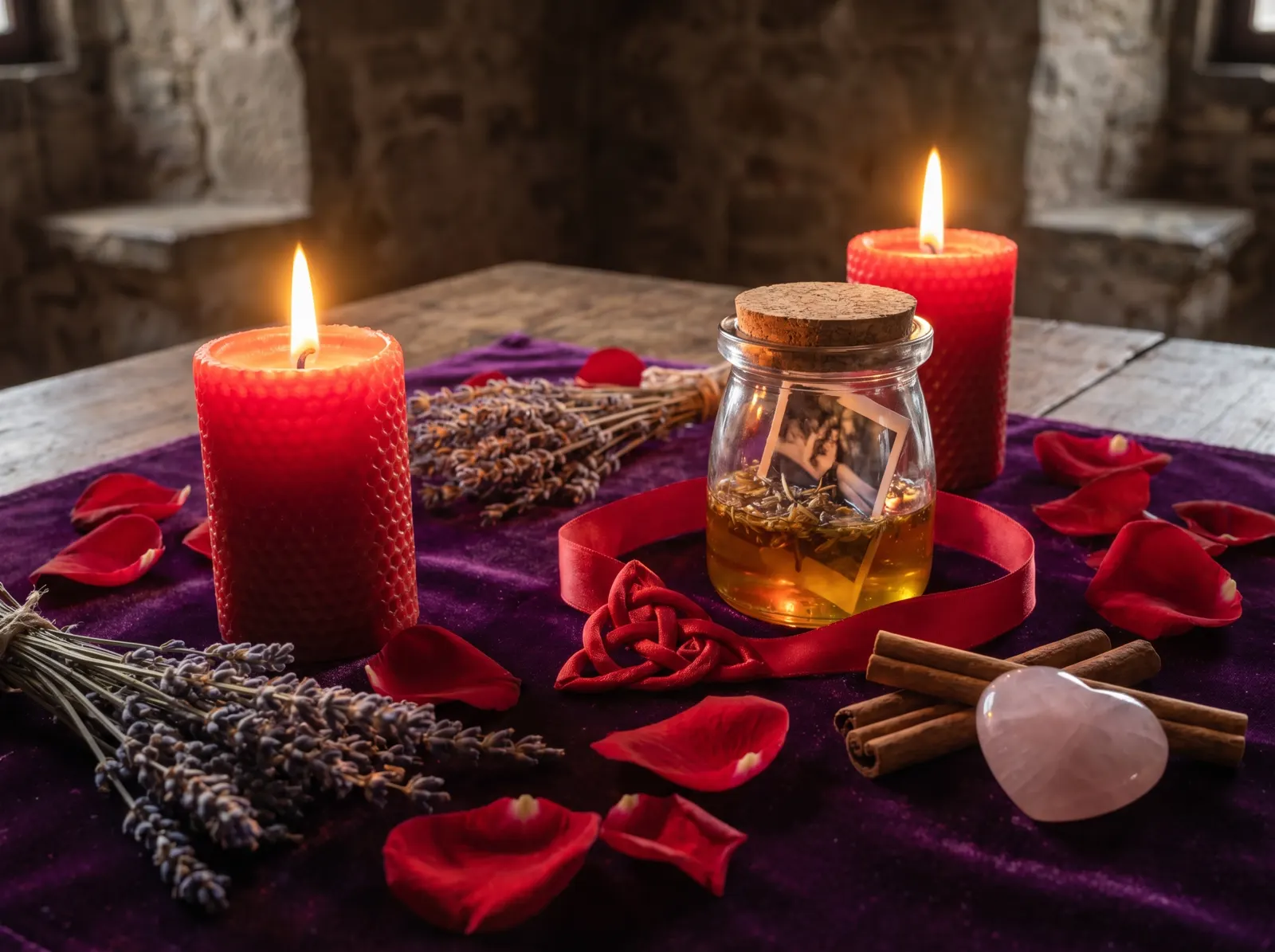
Step 1: end the ritual with thanks
Before you dispose of anything, close the ritual. After all, sit quietly for a minute. Say, Thank you for holding my hope. Of course, I close this work with gratitude and release it. Breathe. If you used a candle, let it burn out safely or snuff it with a snuffer. If you wish, ring a bell once.
This small ceremony is the real closing. Indeed, the disposal that follows is a practical echo of it. Also, people who skip the thanks often feel unfinished. In fact, people who take a minute for it tend to feel light.
Step 2: sort what you have
Set out your remnants on a tray or newspaper and sort them.
| Type | Examples |
|---|---|
| Wax and wicks | Candle stubs, drips, tea light cups |
| Natural materials | Herbs, petals, roots, leaves, salt, sugar, honey |
| Ash and burnt matter | Paper ash, herb ash |
| Paper and cloth | Petitions, ribbon, string, cloth bags |
| Containers | Jars, bowls, dishes |
| Stones and charms | Crystals, coins, tokens |
| Liquids | Moon water, bath water, oils |
Sorting turns a vague worry into a simple list, and each group has an easy answer.
Disposing of candles and wax
Let candles burn out fully if they are small and you can watch them. Still, otherwise snuff them and relight on another day, or retire them. Cool wax can be scraped from holders with a spoon. After all, collect wax stubs and recycle if your area accepts candle wax, or reuse them by melting into a new candle. Throw remaining wax in household waste.
Never pour hot wax down a drain, where it will harden and block pipes. Of course, remove metal wick holders and recycle. Clean glass jars by freezing the wax overnight so that it pops out, or by warming gently in hot water. Indeed, a cleaned glass is ready for another life.

Disposing of herbs, petals and natural materials
Natural materials are the easiest. Bury them in soil outdoors, in a garden bed, a plant pot or at the foot of a tree on your own land or with permission. Also, dig a hole a few inches deep, place the herbs inside and cover them. Say a word of thanks.
If you have no garden, add them to a compost bin or green waste collection. In fact, avoid scattering herbs in public parks, wild areas or waterways, where they may harm native plants or break local rules. Do not give herbs to animals. Some are toxic.
Disposing of ash
Ash from burned paper or herbs should be completely cool before you touch it. Still, test it by holding your palm above it, then touching it lightly. After all, cool ash can be mixed into soil in a pot or garden bed, or discarded in household waste in a closed bag.
Do not pour ash into a river or onto a lawn in large amounts, since it can alter soil and harm plants. Avoid inhaling dust. Wash your hands afterward. Of course, a small pinch is harmless in a plant pot and makes a lovely closing gesture.

Disposing of written papers and petitions
A paper wish can be closed in three ways. Indeed, you can bury it in a pot of soil with thanks. Also, you can tear it into small pieces and put it in recycling. Or you can burn it safely in a heat-proof dish, outdoors or by an open window, with water close by.
Do not burn paper indoors in a bin, near curtains or in a dish that is not heat-proof. If you have written something personal, keep it from prying eyes by tearing or burning it. If the paper bears a name you do not want seen, shred it before recycling. In fact, a closing line such as I release this with thanks completes the act.
Disposing of jars and containers
A honey jar, a bottle or a bowl can be cleaned and reused. After all, empty the contents into soil if they are natural, or into the bin if they are sticky. Wash the jar in warm soapy water. Remove labels. Of course, recycle glass if you do not want to keep it.
If a jar contains honey, sugar or syrup, do not pour it into a drain or river, where it can attract pests and harm water life. Indeed, bury a small amount in soil far from animals, or discard it in household waste. Our article on the honey jar spell Also, explains how the jar is ended.
Disposing of stones, coins and charms
Stones can be cleansed under running water and kept, gifted or returned to the earth. In fact, coins can be spent, donated or left with a kind thought. Charms and tokens can be kept as keepsakes or retired in a drawer. Still, there is no need to destroy them.
If a stone carries sadness for you, wash it, leave it in sunlight for a day and place it somewhere new. If you wish to part with it, give it to a friend or leave it at the base of a tree. After all, a stone that is released with thanks has not been wasted.

Disposing of water and liquids
Moon water, bath water and diluted oils can be poured onto soil or plants. Avoid pouring strong essential oils on plants, which may harm them. Of course, pour water outdoors in a spot where it can soak in, away from animal bowls and drains that lead to streams.
If you have used salt water, pour it onto a driveway or gravel, not a garden bed, since salt harms plants. Rinse containers well. Indeed, a quiet word of thanks, return to the earth, makes the act complete.
Special case: items you should not have
Sometimes remnants include something that does not belong to you: a person’s hair, clothing, photograph or personal item taken without consent. Also, do not keep or burn these in anger. If you can safely return the item, do so, with a simple note. If not, dispose of it respectfully and avoid repeating the act.
Our articles on hair and on clothing In fact, explain why such items should not be used. Still, disposal here is also an act of making amends. After all, take a cleansing bath, light a white candle and say, I release what I should not have held.
Special case: materials from a practitioner
If a practitioner has given you materials, ask them how to close the work. Indeed, some will tell you to bury, some to burn, some to return the jar. Follow their guidance if it is safe and reasonable. If anything seems unsafe or unclear, ask. Also, a good practitioner will explain.
If you are no longer in contact and have materials you do not understand, do not open sealed containers without care, since you do not know what they contain. In fact, when in doubt, ask a trusted elder or a local waste service. Safety comes first.

A closing ritual for disposal
You need: Still, a tray with your sorted remnants, a white candle, a bowl of water.
- Light the candle. Take three slow breaths.
- Say: Thank you for holding my hope. I return you with gratitude.
- Take each group and dispose of it as above, saying thanks.
- Wash your hands in the bowl of water.
- Pour the water on the earth.
- Snuff the candle.
- Open a window and let in fresh air.
The whole ceremony takes twenty minutes. After all, most people feel noticeably lighter.
Dos and don’ts at a glance
| Do | Don’t |
|---|---|
| Close with thanks | Dispose in anger or panic |
| Cool wax and ash completely | Pour hot wax down a drain |
| Bury natural items in soil | Scatter herbs in wild places or water |
| Clean and reuse jars | Pour honey or oil into drains |
| Burn papers safely, or tear them | Burn in a bin or near curtains |
| Keep stones or give them away | Throw materials where animals can eat them |
| Wash your hands | Touch ash or herbs and then your eyes |
A few simple rules prevent almost every problem.
A story, in outline
This is a composite, not a single client, and details are changed.
A man in Chicago wrote to me three months after a honey jar ritual. Of course, the jar sat on his shelf. Indeed, he was afraid to touch it, sure that disposing of it wrongly would bring bad luck. He also had a stack of candle stubs and a folded paper.
I walked him through the steps. Also, he said thank you, took the jar outdoors and buried the honey and herbs at the base of a tree in his yard. He washed the jar and used it for pickles. In fact, he tore the paper into small pieces and recycled it.
He told me the shelf looked bare and his mind felt light. A month later he cleared more space, literally and otherwise. Still, he was ready for the next chapter. It is a pattern, not a promise.
Is it ethical to dispose of remnants this way?
Respectful disposal is ethical and kind to the environment. After all, throwing materials in anger, or using disposal as a way to curse someone, is not. Our work is intended to influence the heart, mind, and emotional connection, and its ending should be as gentle as its beginning.
Read the guide on ethical guidelines and the article on free will.
Common mistakes
The same few mistakes appear again and again.
- Pouring hot wax down a drain.
- Burning papers without a heat-proof dish.
- Throwing materials away in anger.
- Leaving honey or herbs where animals can reach them.
- Keeping remnants for months out of fear.
If you recognize one, correct it calmly. Of course, a tidy ending is within anyone’s reach.

Looking after yourself
Endings can stir feeling. Sleep at regular times. Eat real meals. Indeed, move your body every day. See friends. Also, keep a hobby that is only yours. In fact, tell one trusted person how you are really feeling.
If your mood sinks into hopelessness, or you have thoughts of harming yourself, please contact a doctor, a counselor or a crisis line in your area straight away. Still, no ritual should stand between you and proper care.
A closing thought
The end of a ritual deserves the same care as its beginning. After all, a thank-you, a careful hand and a bit of earth are all it takes. Then the shelf is clear, the mind is quiet and you are ready for whatever comes next.
Do not fear this part. Of course, it is the gentlest of all.
When to ask for help
If you are unsure how to dispose of a particular material, if you feel uneasy about a ritual’s ending or if you simply want an honest outside view, Baba Ali offers a free, private consultation. Indeed, he will listen, tell you what he sees and explain what, if anything, is worth doing. Also, you pay only for ritual materials, and unused materials are refunded in full.
Recycling, composting and the wider world
A ritual practice sits inside a larger world, and a little care for it adds meaning. In fact, choose candles of soy or beeswax, which burn cleanly. Buy herbs in paper or reusable packaging. Reuse jars. Compost organic scraps. Recycle paper and glass. Avoid single-use plastics.
These habits make your practice lighter on the planet and often cheaper. Still, they also remind you that the sacred and the ordinary are close neighbors. After all, washing a jar well is, in its way, a ritual of respect.
Questions readers ask me about disposal
“Is it bad luck to throw away spell materials?” Of course, no, if you do it calmly and with thanks. Indeed, luck does not depend on the bin.
“Can I keep leftovers forever?” Also, you can, safely, but a clean ending is better for your mind.
“What if I do it wrong?” You cannot do much wrong with natural, safe materials. In fact, apologize in your heart and move on.
“Should I tell the other person I disposed of it?” No. Still, it is your private closing.
A week of gentle closing
| Day | Practice |
|---|---|
| 1 | Sort remnants; say thanks for the work |
| 2 | Wash jars and holders; recycle what you can |
| 3 | Bury natural materials with thanks |
| 4 | Tear or burn papers safely |
| 5 | Cleanse the space: open windows, wipe surfaces |
| 6 | Take a warm bath; rest |
| 7 | Do something that begins a new chapter |
After all, a week of closing leaves the house and the heart tidy and ready.
Disposal for different budgets and homes
Not everyone has a garden or a yard. If you live in an apartment, you have plenty of options. After all, a houseplant takes herbs and ash. Of course, a park bench near a tree with a quiet moment of thanks works for small natural items if rules allow. A compost bin or a green waste collection takes organic matter. A recycling bin takes paper and glass.
You do not need elaborate arrangements. Indeed, what matters is the intention behind the act. Also, a single pot of basil on a windowsill, watered with your thanks, can be a perfectly good place to lay a ritual to rest.
Disposal and religious or cultural sensitivities
Some families treat certain materials with special reverence. Others prefer that nothing be buried or burned. If your household or community has customs about the ending of rituals or the treatment of sacred items, honor them. In fact, when in doubt, ask an elder.
If you come from a tradition that uses water for release, a flowing stream or the sea may be customary. Still, check local rules and use only natural, biodegradable materials. Never leave plastic, metal or glass in water. After all, a respectful practice honors both the tradition and the earth.
Teaching children about closing a ritual
If children are present, you may include them in a simple, safe way. Let them water a plant with leftover water. Of course, let them help sort paper for recycling. Keep fire and herbs out of their reach. Indeed, explain in simple words: we say thank you and give things back to the earth.
Children learn from ordinary acts of care. A child who watches an adult finish a task with gratitude learns that endings can be gentle. Also, that lesson will serve them in every sorrow and every goodbye.
What closure feels like
After a good closing, many people describe the same feelings: lightness, a loosening of the chest, a readiness to look up. Some feel a little sad, as if saying goodbye to a friend. Some feel proud. In fact, some feel nothing at all and sleep well. All are fine.
If you feel stirred up, give yourself a quiet evening. Take a warm bath. Call someone. Still, write a line in a notebook. After all, the closing has done its work if you can wake the next morning and think of other things.
A final practice: one small beginning
After you close one thing, begin another, however small. Plant a seed. Of course, send a message to a friend. Indeed, sign up for a class. Rearrange a shelf. Also, put a flower in the space where the jar stood. The beginning does not have to relate to love. In fact, it only has to show your hands that they are free.
Endings and beginnings belong together, and a person who practices both with care walks through life with a lightness that others notice and love.
A quick reference table
| Material | Best ending | Avoid |
|---|---|---|
| Candle stubs | Recycle or reuse wax | Hot wax in drains |
| Dried herbs | Bury or compost | Scattering in wild places |
| Ash | Mix into soil when cool | Pouring in rivers |
| Paper wishes | Bury, tear or burn safely | Burning in bins |
| Jars | Wash and reuse or recycle | Pouring sugary contents down drains |
| Stones | Keep, gift or return to earth | Throwing into water |
| Water | Pour onto soil outdoors | Salt water on plants |
| String and cloth | Reuse or discard cleanly | Burning synthetics |
Keep this table in your notebook for easy reference. Still, most disposal questions have a quick answer here.
A gentle word about guilt
If you feel guilty about how you dispose of materials, or about having done a ritual at all, ask where the guilt comes from. Often it is borrowed from others. Nothing in a respectful, thankful ending warrants guilt. If guilt is tied to something you did to another person, address that directly through honesty and amends.
Let the closing be a chance to put down what you have been carrying. After all, a heart that is clean of guilt is lighter, clearer and more able to love.
Where to go next: services, guides and cities
If this article touched something real for you, these pages go deeper. Of course, each one is written in the same plain, careful way.
Related services
Related guides
Cities Baba Ali serves
When it is better to ask Baba Ali directly
Reading helps, and some situations still need someone who can look at your whole story. Baba Ali offers a free, private consultation by phone, WhatsApp or the contact form, with no obligation. If you go ahead, you pay only for the ritual materials, named item by item, and unused materials are refunded in full. Indeed, support is open 24/7 by chat, and calls are answered within 24 hours.
More from the blog
Keep reading with these related articles:
Questions people ask
How do I safely dispose of love spell remnants?
Close with thanks, then bury natural herbs in soil, recycle wax and glass, tear or safely burn papers and pour water outdoors. Never dispose in anger or in ways that risk fire or harm.
Can I throw spell materials in the trash?
Yes, with respect. Natural items are better buried or composted, and wax and glass can be recycled.
How do I dispose of candle wax?
Let it cool, scrape it out and recycle or reuse it. Never pour hot wax down a drain.
What do I do with ash?
Make sure it is completely cool, then mix a pinch into soil or discard it in a closed bag.
Can I pour honey or oil down the drain?
No. They can clog pipes and attract pests. Bury a small amount in soil or use household waste.
What if I took something from another person?
Return it if you safely can, or dispose of it respectfully. Do not repeat the act.
Is it bad luck to dispose of materials?
No. A calm, thankful ending is a good ending.
Is it ethical to dispose this way?
Respectful disposal is ethical. Disposing in anger or as a curse is not.
Can Baba Ali help?
Yes. Baba Ali offers a free consultation and honest guidance, with you paying only for materials.
Tell me about your situation
Call or WhatsApp Baba Ali now. Also, the first conversation is free, and everything you say stays private.